Working from home has become a norm for many, and creating a productive workspace tailored to your lifestyle can make a significant difference in how efficiently you work. Whether you have a dedicated room or just a small corner, organising your home workspace to suit your needs encourages focus, reduces stress, and makes work more enjoyable. Here are some useful tips to help you set up a home workspace that fits your lifestyle perfectly.
Understand Your Work Style and Needs
Before you start arranging furniture and buying equipment, consider how you work best.
Identify Your Work Habits
– Do you mainly work on the computer, or do you need space for paperwork?
– Are you frequently on video calls or meetings?
– Do you prefer a quiet space or some background noise?
Recognising your work habits allows you to choose the right environment and tools.
Lifestyle Considerations
Think about your daily schedule and the kind of breaks you take. If you have children or other family members at home, you may need a space that minimises distractions or a schedule that aligns with quieter periods.
Choose the Right Location
Selecting the right spot for your workspace is essential for creating boundaries between work and home life.
Dedicated Space Over Shared Space
If possible, dedicate a specific room or section of a room exclusively for work. This helps your brain associate that area with productivity.
Natural Light and Ventilation
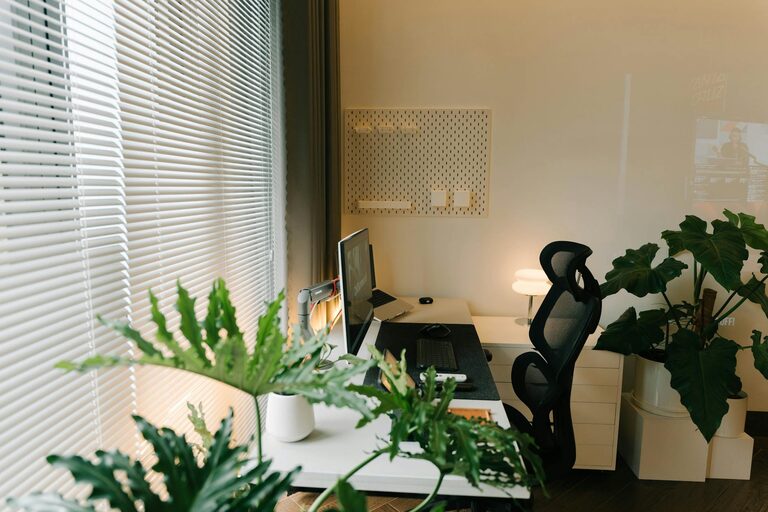
Pick a location with good natural light and fresh air to improve mood and reduce eye strain. Position your desk near a window if you can.
Minimise Distractions
Avoid high-traffic areas or places with constant noise. If that isn’t possible, consider noise-cancelling headphones or room dividers to create a quieter zone.
Furnish Your Workspace for Comfort and Functionality
Your furniture should support both your health and productivity.
Choose an Ergonomic Chair
An adjustable chair with proper lumbar support prevents back pain and helps maintain good posture throughout the day.
Desk Height and Surface
Make sure your desk is at a comfortable height. You should be able to type or write with your elbows at roughly 90 degrees. A spacious desk surface allows you to keep all essential items within easy reach.
Organise with Practical Storage
Incorporate shelves, drawers, or organisers to keep your workspace tidy. Clutter can be distracting, so having dedicated storage helps maintain focus.
Personalise Without Overcrowding
Adding personal touches can make your workspace inviting, but avoid clutter.
Add Some Greenery
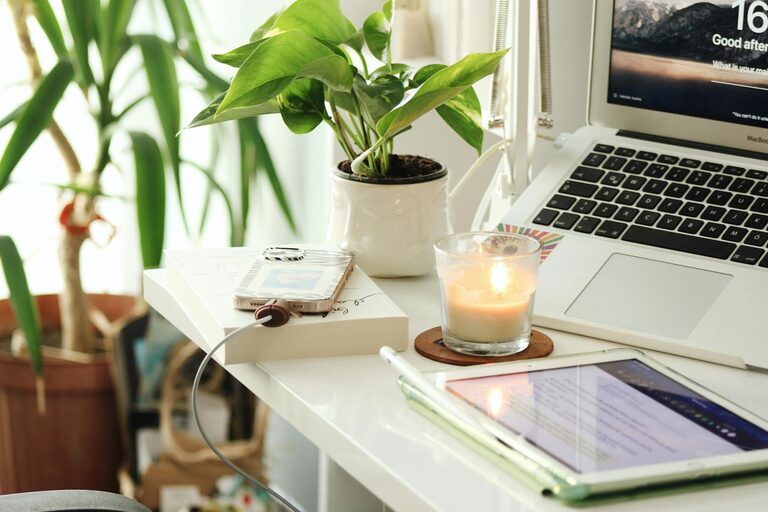
A small plant can improve air quality and bring a bit of nature indoors, which many find calming.
Use Colour Wisely
Choose colours that inspire you or help you relax. Soft greens and blues are often found to support concentration.
Display Inspirational Items
A few photos, quotes, or artwork that uplift you can add personality without overwhelming the space.
Optimise Lighting and Technology
Good lighting and technology setup are key to a smooth workflow.
Use a Combination of Lighting
Combine daylight with desk and ambient lighting. Adjustable lamps allow you to control brightness depending on the task.
Reliable Internet and Equipment
Ensure your internet connection and any devices (computer, printer, phone) are reliable to avoid disruptions.
Cable Management
Keep wires organised to prevent tangling and to give your workspace a neat appearance. Cable ties or under-desk trays can help.
Establish Boundaries and Routines
To maintain productivity, clear boundaries and routines are important.
Set Work Hours
Define when your workday starts and ends. Stick to these times to separate work from home life.
Take Breaks
Schedule regular short breaks to stand, stretch, and refresh your mind. The Pomodoro technique—working for 25 minutes and breaking for 5—is popular and effective.
Communicate with Household Members
Let those you live with know your work hours and the importance of reduced interruptions during those times.
Maintain and Adapt Your Workspace
Your work needs and lifestyle may change, so periodically review your workspace setup.
Regularly Declutter
Spend a few minutes weekly organising your desk and removing unnecessary items.
Adjust for Comfort
If you notice discomfort or reduced productivity, consider changing your setup. Sometimes even small tweaks like chair height or monitor positioning can improve comfort.
Experiment with Layouts
If space allows, try rearranging furniture occasionally to find what works best or to refresh your environment.
—
Creating a productive home workspace that suits your lifestyle involves more than just having a desk and chair. By considering your work habits, choosing the right location, investing in comfortable and functional furniture, personalising your space mindfully, optimising lighting and technology, and establishing boundaries and routines, you can build an environment that supports your productivity and well-being. Remember that flexibility is key, so adapt your workspace over time to continue meeting your changing needs. With these tips, you can create a home workspace that feels just right for you.